
Focusing on the overlooked art of making a fluffy, perfectly cooked egg white omelette with just a few simple ingredients, highlighting the importance of technique and timing over fancy fillings.
This recipe isn’t about stuffing the omelette with every vegetable in the fridge. It’s about mastering that delicate balance—getting the whites tender and silky without overcooking or drying out.
Sometimes, it’s the simplest dishes that teach you the most—how a few gentle folds and low heat can turn a handful of eggs into something surprisingly satisfying, even without cheese or meat.
Focusing on the overlooked art of making a fluffy, perfectly cooked egg white omelette with just a few simple ingredients, highlighting the importance of technique and timing over fancy fillings.
The understated elegance of fluffy whites
- Finding that perfect fluffiness in egg whites was a quiet victory, making breakfast feel special without much fuss.
- I used to think omelettes needed cheese or fillings to matter, but mastering the simple egg white version changed how I see breakfast.
- There’s a strange peace in gently folding a delicate omelette, knowing I kept the whites tender and moist.
- Every time I make this, I remember how something so simple can still surprise me with its subtle richness.
The understated elegance of fluffy whites
- Making this egg white omelette started as a quest for something light but still satisfying after a string of heavy, cheese-laden breakfasts. I was tired of feeling sluggish and wanted a clean, protein-rich start that didn’t weigh me down. Experimenting with just whites and a splash of water taught me that simplicity actually has its own kind of finesse.
- One morning, I accidentally overmixed the whites, and they ended up rubbery. Instead of tossing it, I remembered a tip from a chef friend—gentle folding and low heat. That moment turned into a small revelation: technique really does matter, even with something as straightforward as an omelette.
- heading: The understated elegance of fluffy whites
Historical tidbits about egg whites
- Egg whites have been used in cooking for centuries, originally as a way to make lighter desserts and dishes in ancient Persia and China.
- The modern egg white omelette gained popularity in the early 20th century, especially among health-conscious eaters seeking high-protein, low-fat options.
- In French cuisine, a ‘blanc’ is often cooked gently, a technique that influences how we treat egg whites in delicate preparations like this omelette.
- This recipe emphasizes technique over ingredients, echoing a long culinary tradition of achieving the perfect texture through careful heat and folding.
Key ingredients for fluffy whites
- Egg whites: I used fresh, large eggs and carefully separated the whites, making sure no yolk slipped in—those tiny fats can deflate your fluff. Skip yolks for a true white omelette, but if you want a bit of richness, add a splash of milk or water.
- Salt: Just a pinch to enhance the whites’ natural brightness. Too much, and it can make the whites slightly rubbery—balance is key, especially when you’re aiming for tender, airy bites.
- Pepper: Freshly cracked for a bit of spark. I like to add it after cooking to keep a clean, sharp flavor—avoid seasoning too early, or the pepper can turn bitter during heat.
- Optional fillings: Spinach, mushrooms, or herbs—whatever’s fresh. I prefer to sauté fillings lightly, so they don’t water down the eggs or turn soggy, keeping the omelette light and fluffy.
- Cooking oil: A neutral oil like avocado or grapeseed, just enough to coat the pan. It helps prevent sticking and gives the edges a slight shimmer, but too much can weigh down the delicate whites.
- Water or milk: A splash (about a tablespoon) per egg white. This steams the whites slightly, making them more tender and moist—think of it as a little secret to fluffiness.
- Non-stick pan: I swear by a good non-stick skillet, ideally 20cm (8-inch). It allows gentle heat distribution and easy flipping, which is crucial for a perfectly cooked, tender omelette.
Spotlight on key ingredients
Egg whites:
- I carefully separate fresh, large eggs, ensuring no yolk sneaks in—tiny fats can deflate your fluff. Use whites only for a truly light omelette, or add a splash of water if you want a little extra moisture.
- Egg whites behave delicately during cooking—gently set and shimmer with tiny bubbles. They turn silky and tender if cooked low and slow, avoiding rubbery textures and over-browning.
Salt and pepper:
- Salt: Just a pinch enhances the whites’ natural brightness and helps with even cooking. Too much can make them rubbery, so add gradually and taste as you go.
- Pepper: Freshly cracked for a sharp, clean flavor. I prefer to season after cooking to keep the pepper’s bite bright and avoid bitterness during heat.
Notes for ingredient swaps
- Dairy-Free: Swap milk or water for a splash of almond or oat milk. Keeps the whites moist without the dairy’s richness.
- Vegetarian Fillings: Use sautéed mushrooms or peppers instead of meats. Adds moisture and flavor without overpowering the delicate eggs.
- Herb Variations: Fresh basil or chives can replace parsley. Brightens the omelette with a fresh, aromatic note.
- Oil Choices: Avocado or grapeseed oil work well. If you prefer butter, use a small amount for richer flavor but keep heat low to prevent browning.
- Salt & Pepper: Use sea salt and freshly cracked black pepper for a cleaner, sharper taste. Adjust to your preference for seasoning.
- Add-Ins: Grated cheese or a sprinkle of feta can be added sparingly if you want a richer, more savory bite—be mindful of moisture.
- Alternative Liquids: A teaspoon of sparkling water can create extra fluff, just like in pancake batter—light and airy.
Equipment & Tools
- Non-stick skillet: Prevents sticking and ensures even cooking.
- Whisk: Lightly aerates and combines whites without overmixing.
- Rubber spatula: Gently folds and lifts delicate whites during cooking.
- Small bowl: Separates eggs and holds whites for whisking.
Step-by-step guide to egg white omelette
- Gather your equipment: a 20cm non-stick skillet, a whisk, a rubber spatula, and a small bowl for separating eggs. Preheat the skillet over low to medium-low (about 120°C / 250°F).
- Separate 3 large egg whites carefully into a bowl, ensuring no yolk mixes in. Add a pinch of salt and a splash of water (about 1 tbsp). Whisk gently until just combined and slightly frothy, about 30 seconds.
- Lightly oil the skillet with a neutral oil like avocado or grapeseed—just enough to coat a thin layer. Swirl to distribute evenly. Keep the heat low; you want gentle simmering, not sizzling.
- Pour the egg white mixture into the skillet. Let it cook untouched for about 1-2 minutes, until the edges set and start to lift from the pan. You should see a slight shimmer and some tiny bubbles.
- Using a rubber spatula, gently lift and tilt the pan to let uncooked whites flow to the edges. If you notice any watery spots, give them a gentle nudge to cook through. If it begins to brown or crackle loudly, lower the heat further.
- When the surface is mostly set but still slightly shiny, about 2-3 minutes, add optional fillings if desired—sautéed spinach, mushrooms, or herbs. Fold the omelette in half carefully, or slide it onto a plate if you prefer open-faced.
- Cook for another 30 seconds to 1 minute, maintaining low heat. The omelette should be light, fluffy, and tender—no browning or rubbery texture. Check for a slight jiggle in the center.
- Remove from heat and let rest for 1 minute. This helps the structure settle, making it easier to serve without breaking. Keep it warm by tenting with foil if needed.
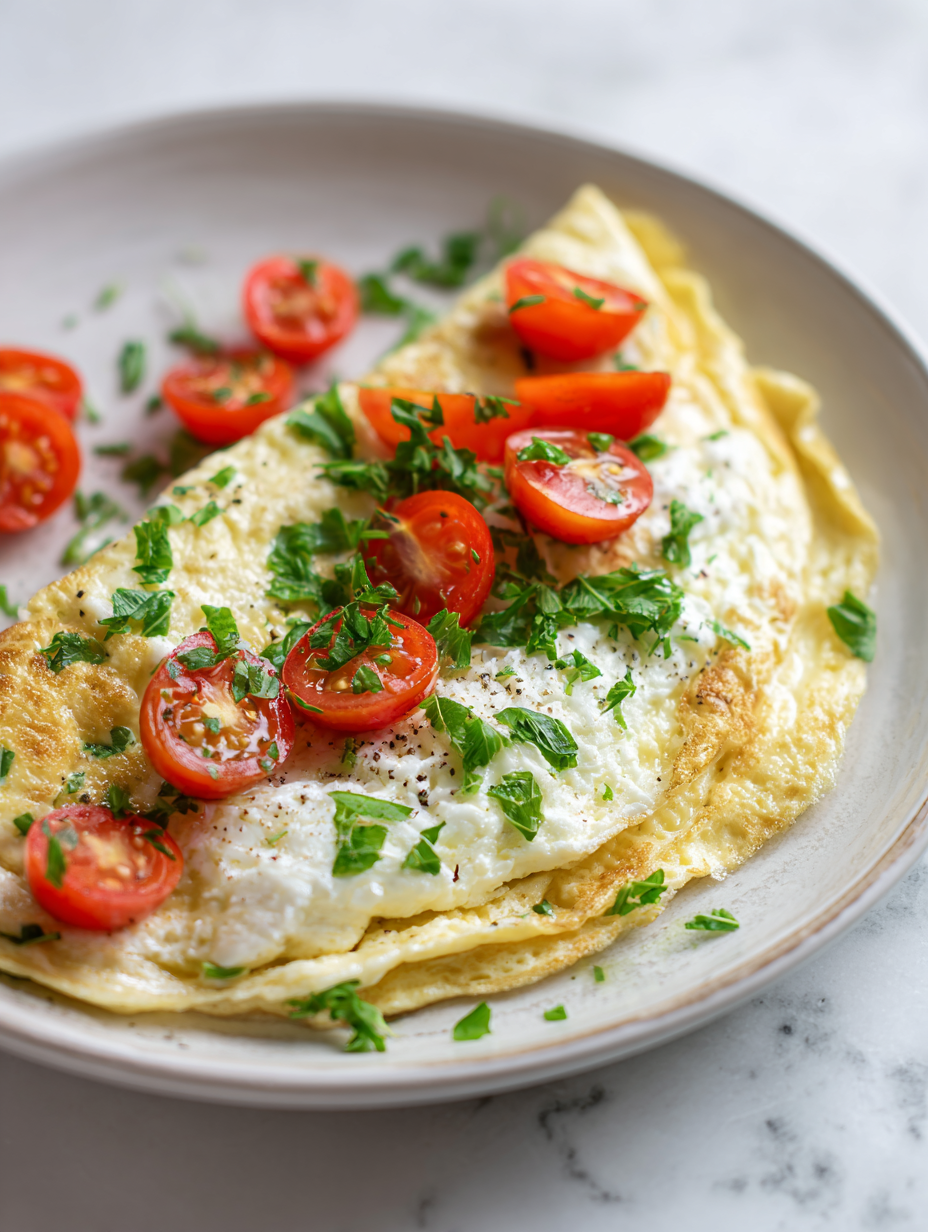
- Finish by sliding the omelette onto a plate. Garnish with a sprinkle of fresh herbs or cracked black pepper. Serve immediately for best fluffiness and delicate texture.
Let the omelette rest for 1 minute off heat to firm up. Slide onto a plate, garnish, and serve immediately while tender and fluffy.
How to Know It’s Done
- Edges are firm but center still jiggles slightly when gently shaken.
- Surface is shiny and slightly puffed, with no runny whites visible.
- Color is soft, pale, with no browning or cracking, indicating gentle, even heat.
Fluffy Egg White Omelette
Ingredients
Equipment
Method
- Gather your equipment: a non-stick skillet, a whisk, a rubber spatula, and a small bowl for separating eggs. Preheat the skillet over low to medium-low heat, about 120°C (250°F).
- Carefully separate three large egg whites into the small bowl, making sure no yolk slips in—tiny fats can deflate your fluff. Add a pinch of salt and a splash of water (about 1 tablespoon). Whisk gently until just combined and slightly frothy, about 30 seconds, creating a light, airy mixture.
- Lightly oil your skillet with a neutral oil like avocado or grapeseed, just enough to coat a thin layer. Swirl to distribute evenly. Keep the heat on low, aiming for gentle simmering, not sizzling.
- Pour the egg white mixture into the skillet. Let it cook untouched for about 1-2 minutes, until the edges start to set and lift from the pan with a slight shimmer and tiny bubbles forming on the surface.
- Gently lift and tilt the pan with a rubber spatula, letting any uncooked whites flow to the edges. Continue this gentle movement for about 1-2 minutes until the surface is mostly set but still shiny and slightly moist.
- If desired, add light fillings like sautéed spinach or herbs at this stage, then carefully fold the omelette in half or slide it onto a plate if you prefer an open face.
- Cook for another 30 seconds to 1 minute on low heat, maintaining a gentle simmer. The omelette should be puffed, tender, and no browning should occur. Gently check for a slight jiggle in the center, indicating it’s perfectly set.
- Remove the skillet from heat and let the omelette rest for about 1 minute. This helps it set fully and retain its moist, silky texture.
- Gently slide the omelette onto a plate, garnish with fresh herbs or cracked black pepper if desired, and serve immediately to enjoy its tender, airy perfection.
Tips for perfect egg whites
- Use a gentle, silicone spatula to fold whites softly—preserves fluffiness and prevents deflation.
- Keep the heat low—medium-low (about 120°C / 250°F)—to avoid browning and rubbery whites.
- Whisk whites just until frothy—overmixing can break down the delicate structure and make them dense.
- Add a splash of water or milk to the whites—steam creates a tender, airy texture, like clouds in your pan.
- Let the omelette rest for a minute off heat—this helps set the structure and keeps it moist and tender.
- When lifting edges, do it gently—too much force can tear the whites, making your omelette look patchy.
- For extra fluff, gently tap the pan during cooking—tiny vibrations encourage even, airy cooking without overdoing it.
Common mistakes and how to fix them
- FORGOT to preheat the pan before adding whites, causing uneven cooking. Always preheat for even heat.
- DUMPED too much oil, making the omelette greasy and heavy. Use just enough to coat the pan thinly.
- OVER-TORCHED the eggs, resulting in rubbery texture. Keep heat low and cook gently.
- CRACKED the eggs directly into the pan, risking shell fragments. Always separate eggs into a bowl first.
Quick fixes and pantry swaps
- If whites are runny, splash a little more water and cover; steam will tighten them.
- When whites brown too quickly, lower heat immediately to prevent rubbery texture.
- Splash a few drops of lemon juice if whites turn dull or watery during cooking.
- Patch cracks by gently pressing edges with a spatula—quick fix before whites set.
- Shield delicate whites with a lid if they shimmer unevenly—traps gentle heat and evens out cooking.
Prep, store, and reheat tips
- You can whisk the egg whites and season them a few hours ahead, then keep covered in the fridge—just give them a gentle stir before cooking to reincorporate any separation. The whites stay light and fresh for up to 24 hours.
- Pre-measured portions of fillings like sautéed spinach or mushrooms can be prepared in advance and stored in airtight containers in the fridge for up to 2 days. Reheat quickly in a hot pan until just warmed—look for a slight shimmer and aroma of herbs or garlic.
- Cooked omelettes can be refrigerated for up to 24 hours. Wrap loosely with foil or store in an airtight container. When reheating, gently warm in a non-stick skillet over low heat, watching for the whites to regain their tender, fluffy texture and avoiding dryness.
- Reheating in the microwave is possible but can make the whites a bit rubbery. Use a low power setting and cover loosely. Heat in 15-20 second bursts, checking for softness and steam—aim for that just-warm, slightly steamy feel.
- Filling textures are best when freshly cooked, but if needed, sautéed vegetables can be kept chilled for up to 2 days. Reheat until fragrant and slightly crisp on the edges for the best flavor and texture, avoiding sogginess.
Top questions about egg white omelette
1. How do I prevent my whites from deflating?
Use fresh egg whites, and separate them carefully to avoid yolk contamination, which can deflate your fluffiness.
2. What’s the best temperature for cooking egg whites?
Cook on low heat, about 120°C (250°F), to keep them tender and avoid browning or rubbery textures.
3. Should I add liquid to my whites?
Add a splash of water or milk to make the whites more tender and airy, creating that light, fluffy texture.
4. What tools help make a perfect omelette?
Use a non-stick skillet and a silicone spatula for gentle folding, which preserves the delicate fluffiness.
5. When should I add salt and pepper?
Season the whites with salt before cooking for brightness, but add pepper after to keep the flavor sharp.
6. Should I rest the omelette before serving?
Let the omelette rest for about a minute after cooking to set the structure and keep it moist.
7. What if my whites turn rubbery?
If whites turn rubbery, lower the heat further and cook slowly, giving them time to set gently.
8. Can I make egg whites in advance?
You can prepare and whisk the whites ahead of time, storing them covered in the fridge for up to a day.
9. How do I reheat leftover omelette?
Reheat cooked omelette gently in a non-stick pan over low heat, just until warmed through for best texture.
10. How do I avoid overmixing the whites?
Avoid overmixing the whites, which can make them dense—whisk just until frothy for maximum fluffiness.
This egg white omelette isn’t just a quick breakfast; it’s a reminder that simplicity and attention to technique can really elevate even the most basic dishes. When you get that perfect tender, fluffy texture, it’s a small triumph that makes mornings feel a little more manageable.
In a world full of complicated recipes, this one keeps things honest—focusing on what really matters: gentle heat, careful folding, and a little patience. It’s a humble dish that, when done right, feels like a quiet win in the kitchen, even on the busiest mornings.

Hi, I’m Theo Granger, the voice and recipe creator behind Boldly Overseasoning.
If you believe salt is not the enemy, spices should be generous, and flavor should never whisper when it can sing, then you are absolutely in the right place. Boldly Overseasoning is my unapologetic celebration of big flavor, confident cooking, and trusting your instincts in the kitchen. I created this space for people who are done with bland food and ready to cook with courage.



Leave a Reply